Problem statement
Venue details live across separate sites and social channels. Guests may need to switch sources to plan one visit.
02 / HOSPITALITY EXPERIENCE · INDEPENDENT CONCEPT
Montreal Cocktail Collective
Five bars. One mobile guide to choosing a venue and planning a visit.
Independent concept, AI-built app. The concept, inspiration, and collected information are my own. AI created the build. No participant research, usability testing, or measured commercial outcome yet; no partnership is claimed.
Actual interface captures from 8 October 2026. The screens show the current implementation; they are not participant-test evidence. Venue information, map geography, and service claims need validation before a public guide launch.
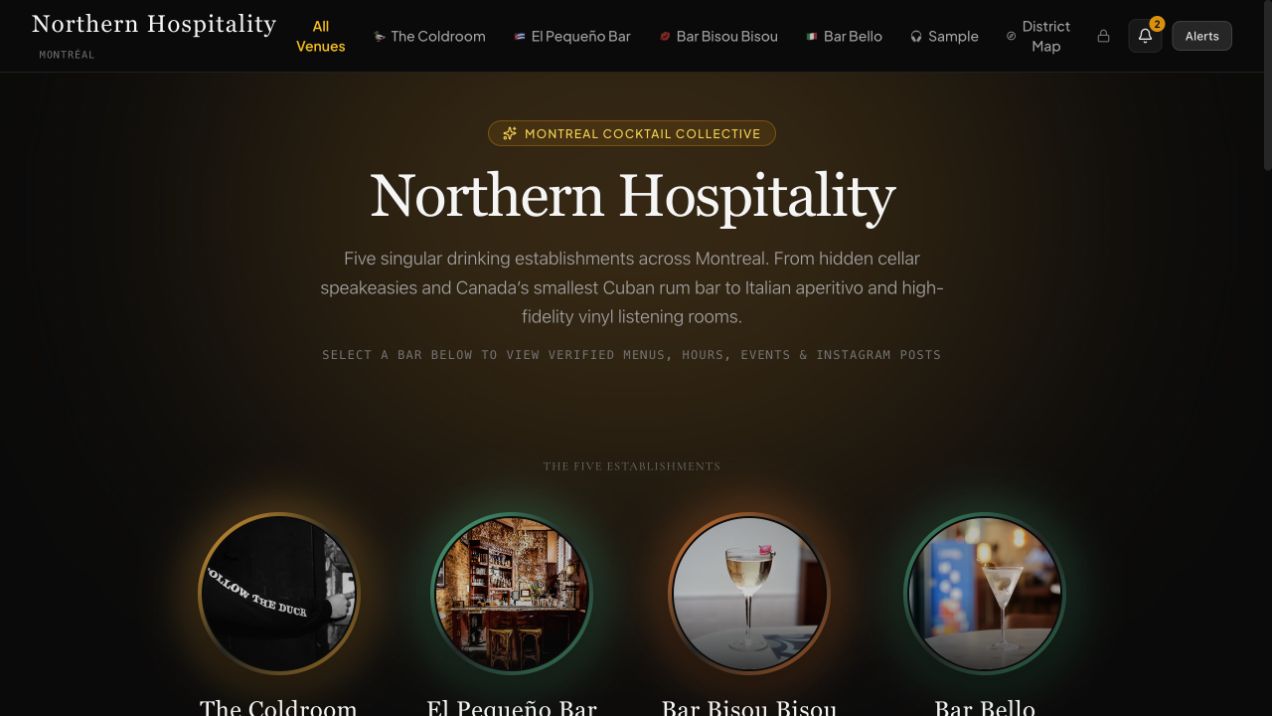
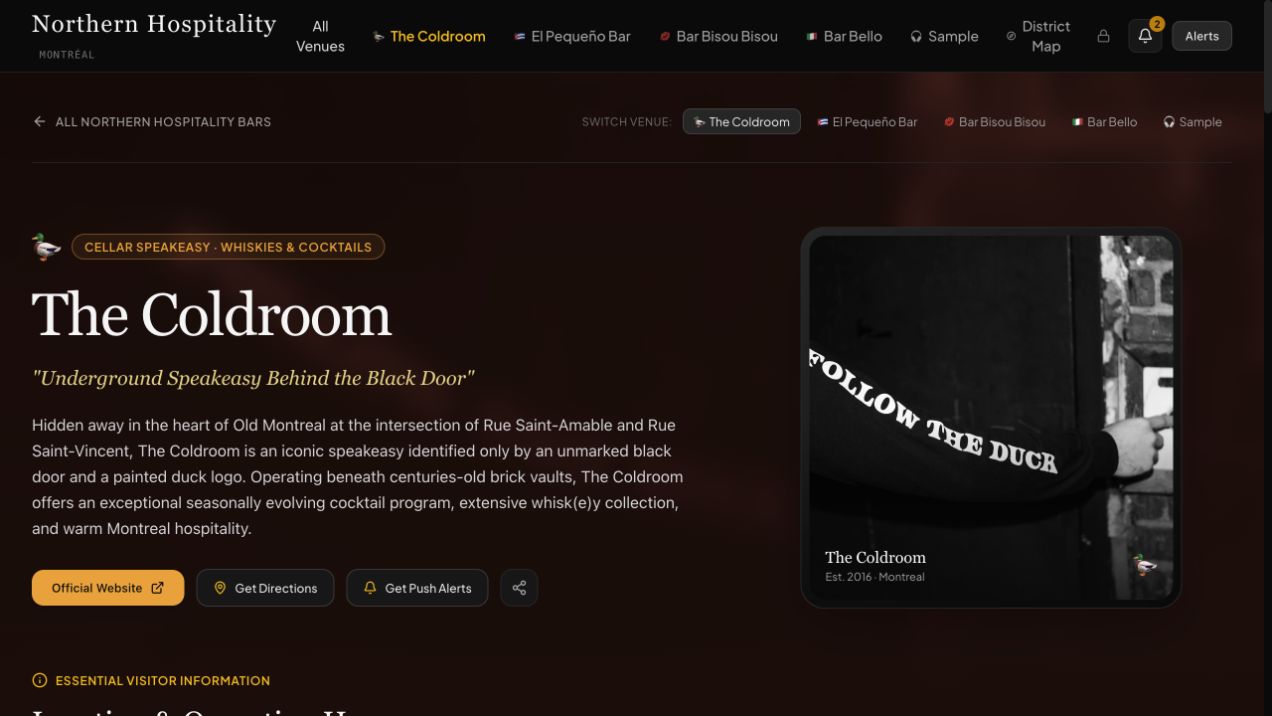
The live prototype contains promotional and service claims that have not been verified. The portfolio treats them as prototype content, including menu, event, social-feed, and alert information.
Venue details live across separate sites and social channels. Guests may need to switch sources to plan one visit.
A consistent content hierarchy aims to reduce search effort while preserving each bar’s identity; that benefit remains a hypothesis.
Help guests choose confidently using reliable location, hours, menus and events in one mobile experience.
If visit essentials share a predictable structure, guests will find them with fewer source switches and greater confidence than through their current approach.
Make five distinct venues easy to compare?
Communicate content freshness and trust?
Offer useful updates without unwanted alerts?
Desk review · 8 October 2026. Interface observations, not measured usability results.
| Benchmark | Strength | Design opportunity |
|---|---|---|
| Five venue websites | Distinct identities; useful venue-specific content. | Standardize essentials. Confirm missing Sample details with the venue. |
| Groupe Barroco | Group directory with individual venue links. | Test integrated details against a directory-only experience. |
| Google Maps | Location discovery and documented business-information tools. | Hand off directions; add collective identity and context. |
| Social discovery and venue-profile access. | Keep essentials first; verify authorized, dated feed content. |
Design implication: consistency is the proposed differentiator. Its value still needs guest validation.
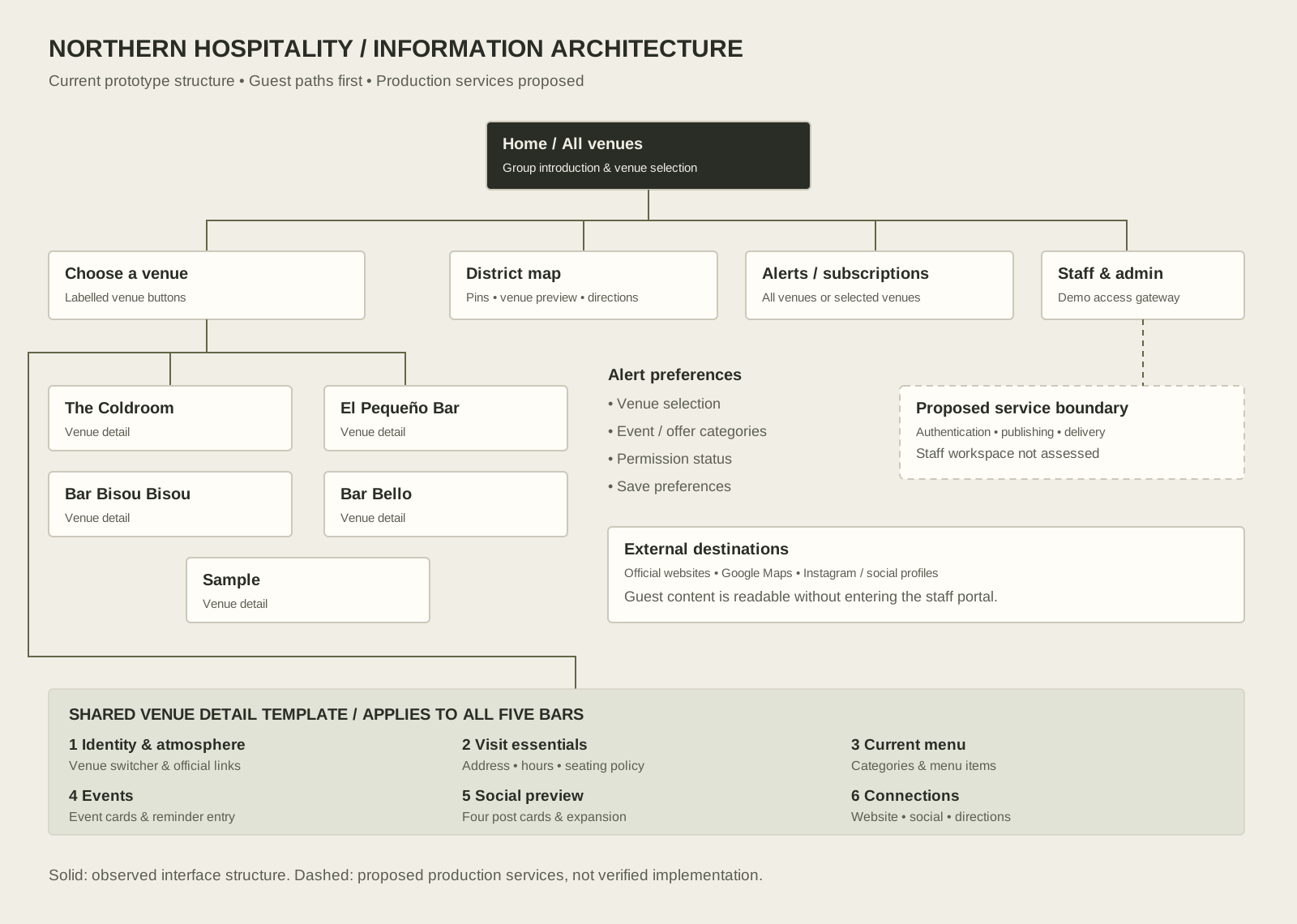
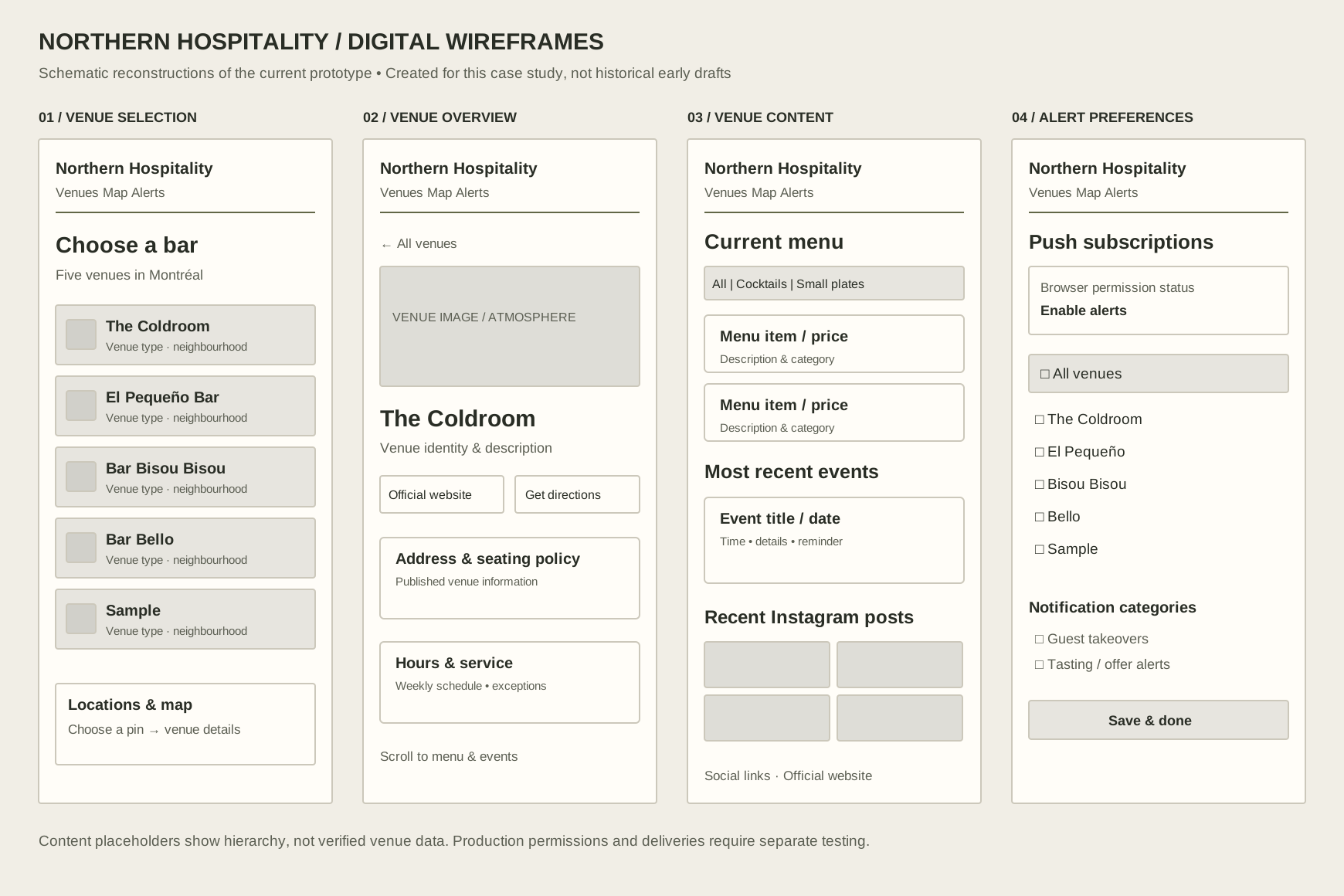
Labelled venue choices retain individual identity.
Hours, address and menu precede events and social previews.
Venue switching and optional alert preferences support flexible browsing.
Research question: does centralization improve planning enough to earn repeat use?
Confirm group scope, content ownership, permissions and maintenance capacity.
6–8 locals and visitors; 30–45 minutes. Explore recent planning behaviour, trust and unmet needs.
Affinity-map evidence; refine personas, JTBD and prioritized product requirements.
Walk through your last bar choice. Which sources did you use? What information changed your decision? What felt missing or unreliable? When are venue updates useful?
Voluntary participation; recording opt-in with a note-only alternative. Anonymize findings, separate contact data, delete recordings within 30 days of synthesis, and obtain separate portfolio permission.
Targets are proposed acceptance criteria, not results. Report participant counts and observed patterns; this sample does not establish statistical uplift.
Review keyboard access, focus, contrast, screen readers, zoom, touch targets and map alternatives. Check missing-content and low-bandwidth states. Validate notification delivery, preference persistence and staff access separately in staging.
Current materials: an AI-built prototype, documented IA, reconstructed screen references, and a proposed research plan. I originated the concept, inspiration, and collected information. Guest outcomes remain unmeasured.
Desk review and prototype inspection: 8 October 2026. Backend authentication, live social synchronization and push delivery were not verified. Personas, hypotheses and study plans are provisional.